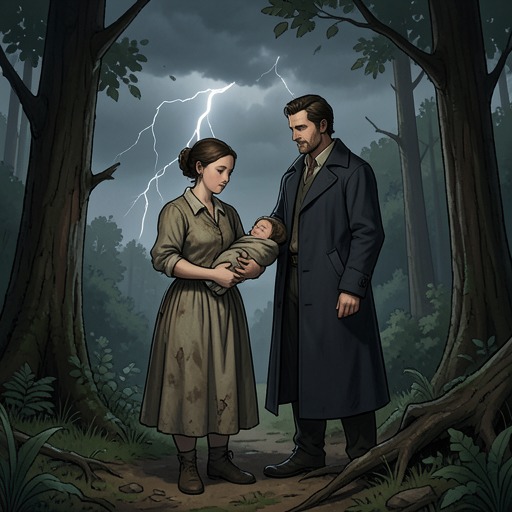
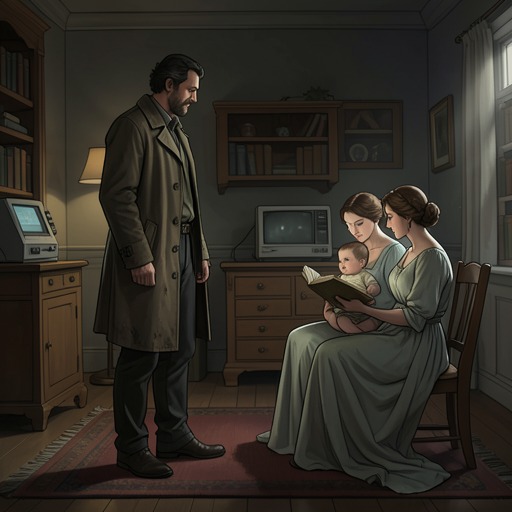
Manuel Arroyo Benítez and Simona Gaetán Peroni’s marriage
Los pacientes del doctor GarcíaManuel Arroyo Benítez and Simona Gaetán Peroni’s marriage is portrayed as the intimate center of a family forced into political exile for a second time. When Argentina’s 1976 military dictatorship threatens their daughter and household, Manuel’s experience of the Spanish Civil War and his own exile shapes a plan to get them to safety. The decision binds the couple in a common purpose, but it also brings separation, financial loss, and an uncertain future: Simona and their children leave Buenos Aires while Manuel remains behind to complete arrangements, and the family ultimately departs without knowing when it can return.
A home built after exile
By the time the political crisis reaches the family, Buenos Aires is not a temporary stop for Manuel. He had arrived in Argentina as an agent of the Spanish Republic in exile, on a diplomatic mission that failed, and had become stranded there. Over the years, the city became the only home he had known since leaving Robles de Laciana. His life with Simona included a family, a house, economic security, and a business: the widow of Bley had invested proceeds from the sale of land at Fortín Tiburcio in a language school that Manuel helped expand, adapting its courses to the neighborhood and securing agreements with foreign institutions and universities. The couple’s apparent stability was therefore the outcome of years of work after an earlier forced departure, not a life untouched by displacement.
That security makes the new threat especially consequential. By 1976, Manuel has a good job, a home, a loving relationship, a family, and the prospect of retirement—things he had never expected to possess. He recognizes that the household has much to lose, but the danger leaves no safe option of simply staying put. The marriage is tested not by a private disagreement but by the necessity of choosing between the life the couple has made and the family’s immediate safety.
Danger reaches the family
The military dictatorship’s repression begins with illegal arrests on the night of 24 March 1976. A week before Manuel decides to act, authorities come looking for Simona’s boyfriend, Charlie. They do not find him, but they take his flatmate, a journalist who, as Simona understands it, is not politically involved. Her fear is not abstract: she worries that Charlie may be found and that her own connection to him will place her at risk.
At first, Manuel is silent and still as his daughter cries. Then he returns to the practiced vigilance of a man who has lived through political violence before. He asks whether Simona’s brother José Ignacio knows that she and Charlie are a couple, then whether he knows that she is politically active with Charlie. Simona says that José Ignacio does not know, and that she did not attend the meetings at Charlie’s flat. Manuel checks that no information linking her to the group can be passed on through him. Only after receiving those answers does he tell his wife and children that the family will follow his decision.
Manuel’s response draws directly on what he knows of war and repression. He warns Simona that a person held and interrogated may be pushed beyond the limits he intends to endure; Charlie’s possible disclosure, he insists, would not make him responsible for what was done to him. He also warns the other children that authorities may take them if they come looking for their sister, even if they know nothing. His argument is not that they have done something wrong, but that innocence alone cannot protect them. The knowledge that the same pattern has occurred before, including in Spain, turns his memories into a practical warning to the household.
A plan made under pressure
The plan initially meets resistance. Manuel tells Simona that she must go to the newspaper where she works and say she needs time away because she did not know her boyfriend was a subversive. He expects the explanation to be believed, even if people judge her for leaving. He proposes that the family go to their country house at Fortín Tiburcio, where they can present their stay as a vacation and say Simona is distressed, the boys have finished their examinations, and the house is to be put up for sale. Simona questions the plan, and their sons object: Guillermo still has two examinations left in his Industrial Engineering degree, while Juan also has reasons to remain in Buenos Aires.
Manuel asks the family directly whether they want Simona to disappear and whether they want him to disappear as well. The questions make clear what the proposed journey means. It is not simply a holiday or a change of residence; it is a decision to leave before the danger becomes immediate. For Manuel, the choice is sharpened by his own history of having been forced into exile. He has built a life in Argentina and does not want to abandon it, yet he believes that remaining together and alive requires the family to go.
His explanation to Spanish consular officials brings that history into the present. Manuel says that he knows military coups and civil war because he has already lived through them. He presents several identity documents and explains that his own name is Manuel Arroyo Benítez, though his children bear the surname Pacheco. The Spanish consul registers the Pacheco Gaitán family as Spanish residents in Argentina to protect Simona and agrees to hasten their passport arrangements. Manuel says that he intends to settle in Madrid, where a friend can help him. What begins as a decision to protect the household thus becomes a renewed crossing from Argentina to Spain, with the old exile’s experience now guiding the family’s route.
Separation, care, and departure
The journey does not begin as a united, uncomplicated choice. On 23 November 1976, Simona tells her father she will never forgive him. Her mother is preoccupied because Guillermo has gone to stay with a friend and announced that he will remain in Buenos Aires. Juan blames Simona for what is happening until he makes her cry, then falls silent for the rest of the trip. The family reaches Fortín Tiburcio carrying separate grievances and fears, even as the danger makes their shared purpose urgent.
Manuel returns north with the son who has not stayed behind. Charlie remains in hiding, while Manuel distributes passports and plane tickets. Guillermo keeps his documents but continues to say he will not leave for Spain. On 28 December, the Pacheco Gaitán family returns to Buenos Aires for the final time. Manuel arranges for his sister-in-law Adelina to represent the family’s interests during their absence: she will handle the sale of the country house, rent out their Recoleta apartment, and collect income from the school. Simona had asked that they sell nothing except the country house, but Manuel knows from earlier exile that such promises may not survive the demands of life elsewhere. He signs the authorization nonetheless, committing the family’s property and livelihood to someone they trust.
The departure costs Manuel the future he had expected. His mother-in-law recognizes that he will no longer be able to retire as planned. He agrees that he will have to keep working, though after so many years away he expects no easy return to employment. His answer is that they will manage, without pretending that the loss is small. The family packs amid a silence that holds a grief each person experiences privately, even though they share the same departure.
At the airport, Simona asks to buy a box of alfajores as a keepsake. Manuel proposes buying two and eating one on the plane. Then he tells her they are not leaving forever and promises they will return as soon as they can. The reassurance is an act of care rather than knowledge: he does not know when a return will be possible. Juan’s teasing reply reminds Manuel that an exile may know the date of departure without knowing the date of homecoming. Manuel embraces Simona and Juan, while Guillermo’s call to hurry brings the family back to the immediate work of boarding. They pass through security, take five seats in the same row, and fly away from the home they have built.
Marriage as a second experience of exile
The marriage’s defining crisis is shaped by the recurrence of displacement. Manuel had once left Spain for political duty and found himself unable to return; now he has to leave Argentina, where his work and family life have taken root, because state violence again threatens the people closest to him. His past does not make this departure painless, but it allows him to recognize the danger early and act on it. Simona’s fear for their daughter and the family’s resistance to the plan show the personal cost of the decision, while their eventual departure marks a shared commitment to keeping the household together despite disagreement and uncertainty.
The airport promise gathers the relationship’s practical and emotional strands into one gesture. Manuel cannot guarantee a return, and the family’s history makes the uncertainty plain to him. He nevertheless offers Simona a future to hold on to, even as he makes arrangements that acknowledge how difficult rebuilding will be. Their marriage is thus presented not as protection from political history, but as a bond through which its demands are faced: the work of preserving the family, the losses of leaving, and the hope—unsecured but deliberately sustained—that they may one day come home.